The release of the CUET PG 2026 answer key marks a crucial step in the postgraduate admissions process in India, particularly for institutions like Jawaharlal Nehru University (JNU). This development not only affects candidates’ immediate prospects but also sets the stage for the upcoming academic year, with significant implications for those seeking admission to various postgraduate programs.
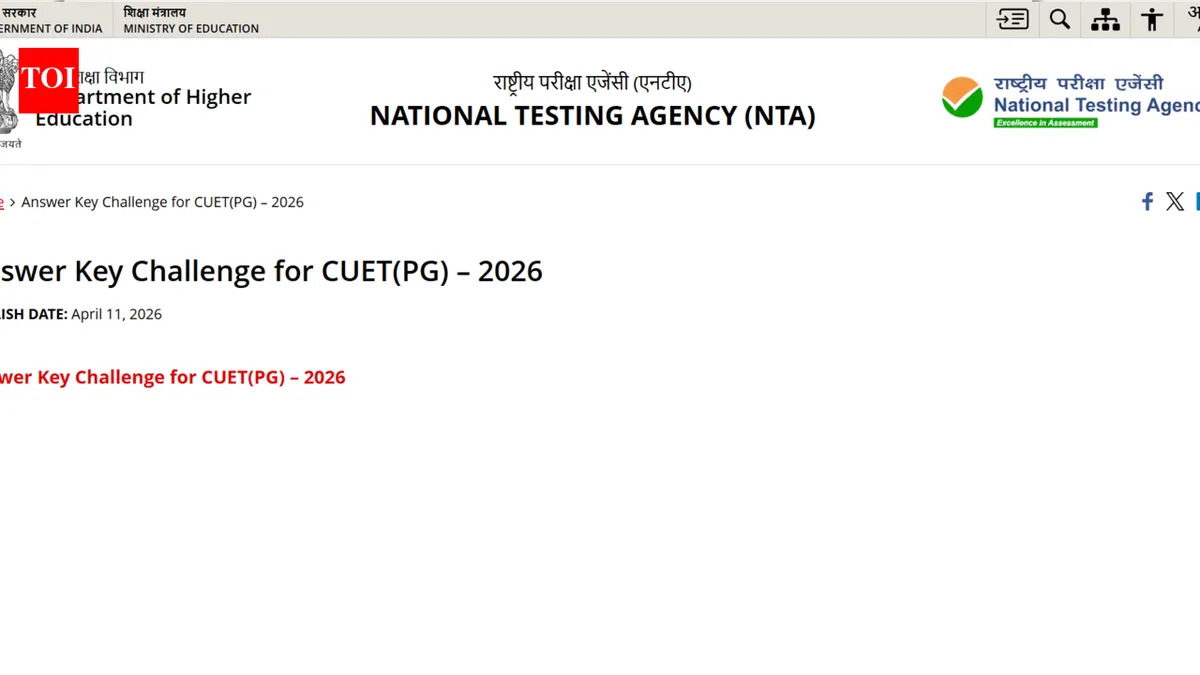
The answer key and response sheet for CUET PG 2026 have been made available on the official website exams.nta.nic.in. Candidates can review their responses and challenge any discrepancies during the designated window from April 11 to April 14, 2026. An objection fee of ₹200 per question is applicable, which is non-refundable. This process allows candidates to ensure that their scores accurately reflect their performance, thereby influencing their chances of admission.
Following the challenge window, a final answer key will be released after a thorough review. This final version will be binding, meaning that it will determine the scores that candidates receive. Understanding the implications of these scores is critical, especially as they relate to the safe score ranges that have been established for various categories. For instance, a safe score for the General category is estimated to be between 210 and 230, while for OBC candidates, it ranges from 200 to 220. SC candidates are looking at a safe score of 180 to 200, and ST candidates should aim for a score between 160 and 180.
The significance of these safe scores cannot be overstated, as they provide candidates with a benchmark for what is likely to be required for admission into competitive programs. JNU, one of the premier institutions in India, will commence its PG admissions for the 2026-27 academic year following the announcement of CUET PG results. This timing underscores the importance of the CUET PG exam in shaping the academic futures of thousands of students.
Moreover, it is essential to note that candidates must have appeared for CUET PG 2026 to be eligible for JNU admissions. This requirement emphasizes the exam’s role as a gatekeeper for postgraduate education in India. Additionally, for specific programs such as MSc in Biotechnology, admissions will be based on the GAT-B score, further diversifying the criteria for entry into various fields of study.
As the examination process unfolds, candidates are advised to stay informed about the developments regarding their scores and the admissions process. The challenge window provides a crucial opportunity for candidates to ensure that their results reflect their true capabilities, and the final answer key will ultimately determine their fate in the admissions landscape.
With the stakes high and the competition fierce, the CUET PG 2026 is more than just an examination; it is a pivotal moment that will shape the academic journeys of many students. As the results are anticipated, the education community is keenly observing how these developments will unfold and what they will mean for the future of postgraduate education in India.