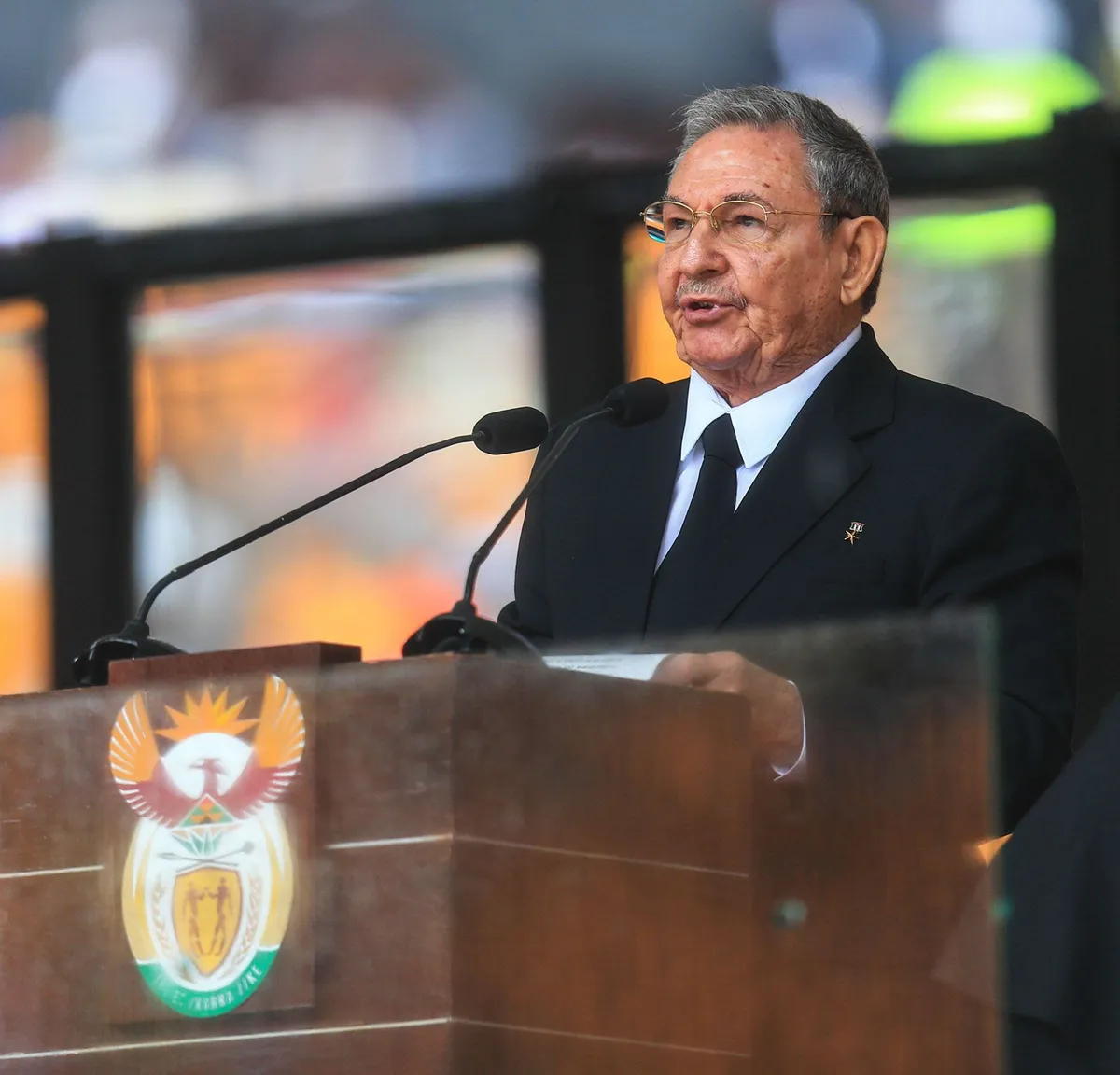
The legacy of Fidel Castro remains a defining element in Cuba’s political landscape, shaping the nation long after his retirement. The most significant consequence of his rule is the ongoing struggle for economic stability and political reform, particularly under the leadership of his brother, Raúl Castro, and current president, Miguel Díaz-Canel. As Cuba faces a humanitarian crisis exacerbated by prolonged power outages and economic issues, the stakes for the Cuban population are alarmingly high.
Fidel Castro’s leadership, which began with the triumph of the Cuban Revolution in 1959, set the stage for a one-party socialist state. His policies and governance style created a system that prioritized state control over economic activities. This approach led to significant challenges, particularly in the wake of the U.S. embargo and the collapse of the Soviet Union, which had provided crucial support to the Cuban economy.
Raúl Castro, who succeeded Fidel in 2008, initiated a series of economic reforms aimed at revitalizing the stagnant economy. These reforms included the removal of wage restraints and the allowance of private enterprise, which were critical steps in addressing the economic decline that saw an 11 percent GDP drop in 2020. Despite these efforts, the Cuban economy has struggled, with around 500,000 government employees laid off as part of these reforms, highlighting the difficult transition from a state-controlled economy to one that allows for private participation.
The impact of U.S. foreign policy during this transition cannot be understated. Under the Trump administration, Cuba faced an oil blockade that resulted in nationwide blackouts, further straining the already fragile economy. This situation prompted the United Nations to issue warnings about a potential humanitarian crisis, emphasizing the dire need for international assistance. The Cuban government estimates that $94 million is needed to address the energy crisis and repair damage from hurricanes, underscoring the urgency of the situation.
Raúl Castro’s tenure also marked a significant thaw in U.S.-Cuban relations, particularly during his historic talks with President Barack Obama in 2014. These discussions led to the reopening of embassies and a re-establishment of diplomatic relations, a pivotal moment in the history of U.S.-Cuba relations. However, the subsequent shift in U.S. policy under President Trump reversed many of these advancements, leaving Cuba in a precarious position.
As Raúl Castro announced his retirement from the Communist Party in April 2021, the question of leadership continuity became more pressing. Miguel Díaz-Canel, who took over the presidency, emphasized the need for dialogue and common agendas to address the challenges facing Cuba. His administration is now tasked with navigating the complexities of governance in a nation where 70 percent of the population was born after the revolution, a demographic that may have different expectations and aspirations.
In the health sector, the situation remains critical. The World Health Organization has expressed deep concern over the delivery of health services in Cuba, with Tedros Adhanom Ghebreyesus noting that the health situation is perilous. This concern is compounded by the economic challenges that have limited resources for healthcare, further endangering the well-being of the Cuban population.
Reaction from the field
As Cuba grapples with these multifaceted challenges, the future remains uncertain. The ongoing dialogue about reform and the potential for further economic liberalization will be closely watched by both domestic and international observers. Details remain unconfirmed regarding the next steps for Cuba’s leadership and the broader implications for its relationship with the United States and the international community.