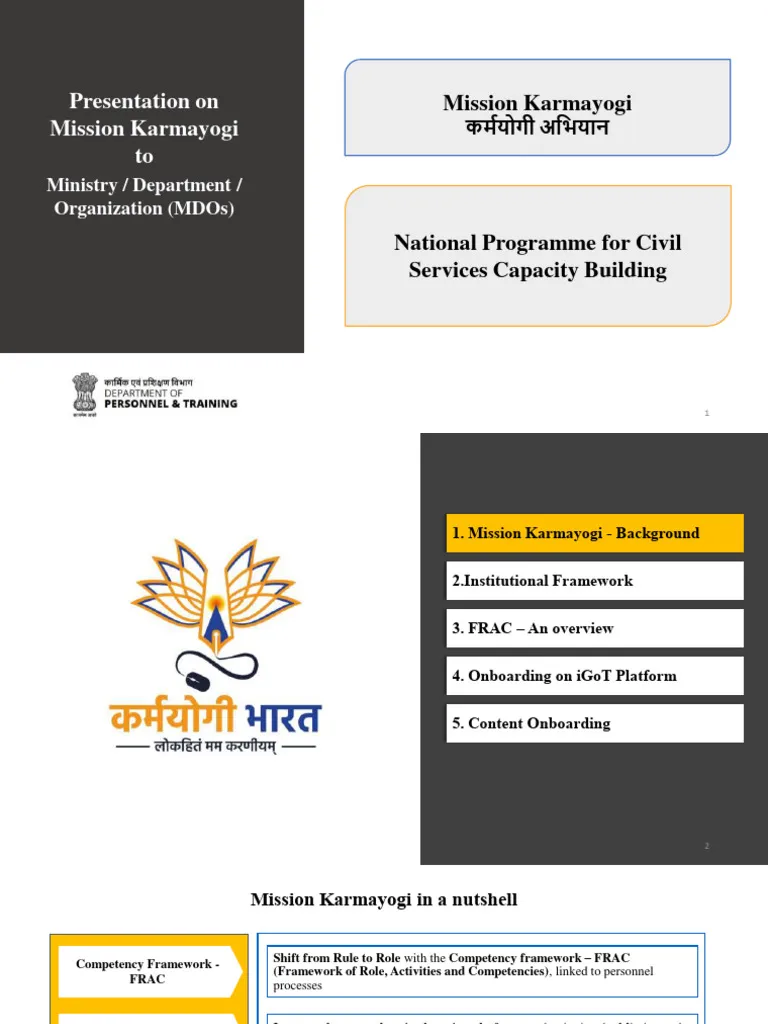
Before the recent developments surrounding the iGOT Karmayogi initiative, expectations were centered on the gradual enhancement of civil service efficiency through the Mission Karmayogi, launched in 2020. This mission aimed to build the capacity, performance, and efficiency of civil servants across India, but the pace of change was perceived as slow and incremental.
However, a decisive moment arrived with the announcement of a week-long Sadhna Saptah, set to take place from April 2 to April 8, 2026, in New Delhi. This initiative, organized by the Department of Personnel and Training, the Capacity Building Commission, and Karmayogi Bharat, marks a significant shift in the approach to civil service training.
The immediate numbers reveal a structured plan: participants are required to log in to the iGOT Karmayogi Bharat portal and complete at least four hours of prescribed courses during this week. This app-based learning approach is expected to engage officials actively in skill enhancement and self-development.
Dr. Alka Mittal, a key figure in the initiative, emphasized that “Mission Karmayogi aims to build the capacity, performance and efficiency of civil servants across the country.” The Sadhna Saptah is designed to strengthen the culture of capacity building among civil servants, reflecting a more proactive stance in training.
Moreover, the Rashtriya Karmayogi Jan Seva Programme, which took place earlier on February 9, 2026, at the ICAR–Indian Institute of Millets Research in Hyderabad, set the stage for this upcoming training. This program included four thematic modules focusing on the role and responsibilities of public servants.
Dr. C. Tara Satyavathi noted, “The training programme comprised four thematic modules addressing the concept and role of a Rashtriya Karmayogi,” indicating a comprehensive approach to civil service education.
Vikas Kulkarni reiterated the importance of the iGOT Karmayogi platform, stating, “Officers and staff have been advised to log in to the iGOT Karmayogi Bharat portal and complete at least four hours of prescribed courses.” This requirement underscores the initiative’s commitment to fostering a culture of continuous learning.
As the Sadhna Saptah approaches, the direct effects on civil servants are anticipated to be profound, with a renewed focus on skill development and efficiency in public service. The integration of digital learning tools is expected to enhance accessibility and engagement among government employees.
While the initiative has garnered positive responses, details remain unconfirmed regarding the long-term impacts of this training on civil service performance. Nonetheless, the iGOT Karmayogi initiative represents a pivotal moment in the evolution of civil service training in India, promising a more dynamic and responsive approach to capacity building.