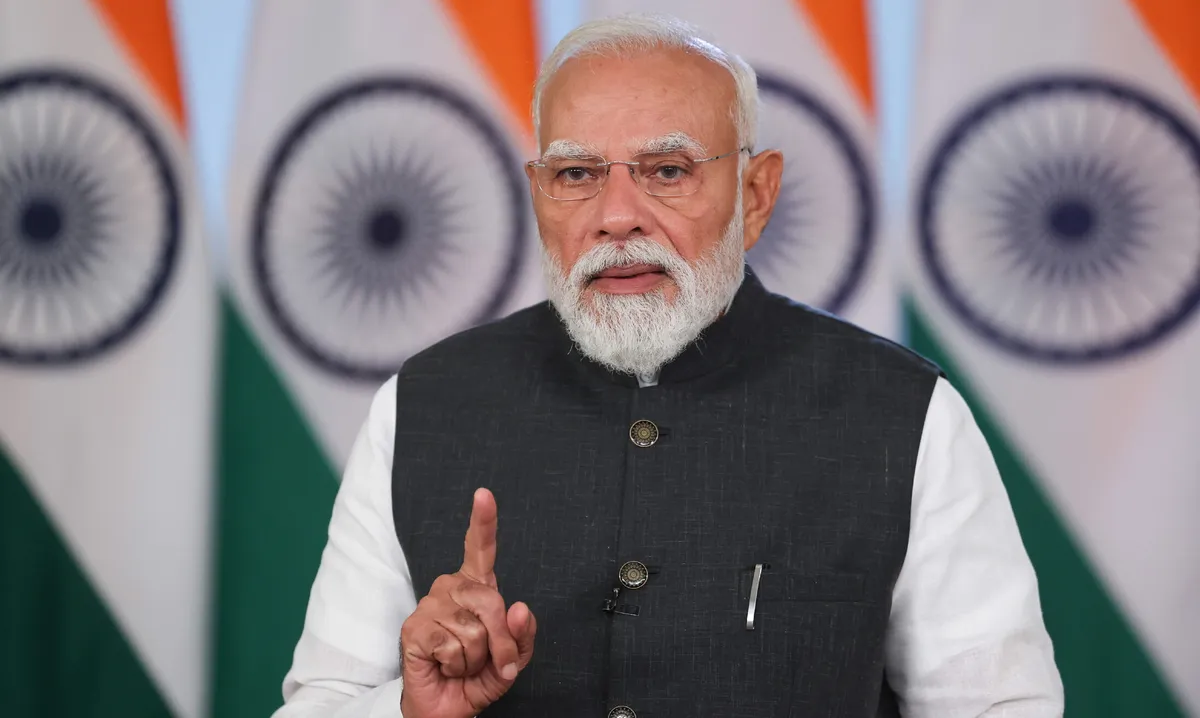
“Governance is now being given a new identity by making it truly citizen-centric,” stated Prime Minister Modi, underscoring the transformative vision behind the Karmayogi initiative. This program, officially known as Mission Karmayogi, aims to reform the Indian civil services through a robust framework of continuous learning and competency-driven training.
Launched in 2021, Mission Karmayogi is a significant step towards enhancing the capabilities of government officials across India. The initiative is designed to shift governance from a rule-based to a role-based approach, ensuring that officials are equipped with the competencies necessary for their responsibilities. As PM Modi emphasized, “Before every decision, when you think about what your duty demands, the impact of your decisions will automatically multiply many times over.”
The Karmayogi Sadhna Saptah, a week-long capacity-building program observed from April 2 to April 8, serves as a focal point for this initiative. During this period, officials engage in various training sessions and workshops aimed at enhancing their skills. The Capacity Building Commission (CBC), established in April 2021, plays a crucial role in orchestrating these efforts, collaborating with all 30 States and Union Territories to create tailored Capacity Building Plans.
Dr. R Balasubramaniam, a key figure in the initiative, remarked, “Mission Karmayogi is playing a key role in making government officials future-ready and transforming the capacity-building ecosystem in the country.” This sentiment reflects the growing recognition of the need for a proactive approach to governance, particularly in an era marked by rapid technological advancements.
The iGOT platform, a cornerstone of the Karmayogi initiative, has become a vital resource for government officials. With over 1.5 crore active learners and more than 8.3 crore course completions, the platform offers over 4,600 competency-linked courses. In the last National Learning Week alone, officials generated 4.5 million hours of course enrollments and 3.8 million hours of actual learning, demonstrating the initiative’s impact on professional development.
Moreover, the mission emphasizes the importance of technology in governance and decision-making. AI-based training sessions are included to familiarize officers with emerging technologies, ensuring they are well-prepared to navigate the complexities of modern governance. This focus on technology aligns with the guiding philosophy of governance, encapsulated in the phrase “Nagrik Devo Bhava,” which translates to treating the citizen as supreme.
As the Karmayogi initiative continues to evolve, its influence on the civil service landscape in India is becoming increasingly evident. The commitment to enhancing the capabilities of every government employee reflects a broader vision for a more efficient and responsive governance structure. With ongoing developments and the potential for further integration of technology, stakeholders are keenly observing how this initiative will shape the future of civil services in India.
Details remain unconfirmed regarding the next steps for the Karmayogi initiative, but the momentum generated thus far suggests a promising trajectory for the future of governance in India.