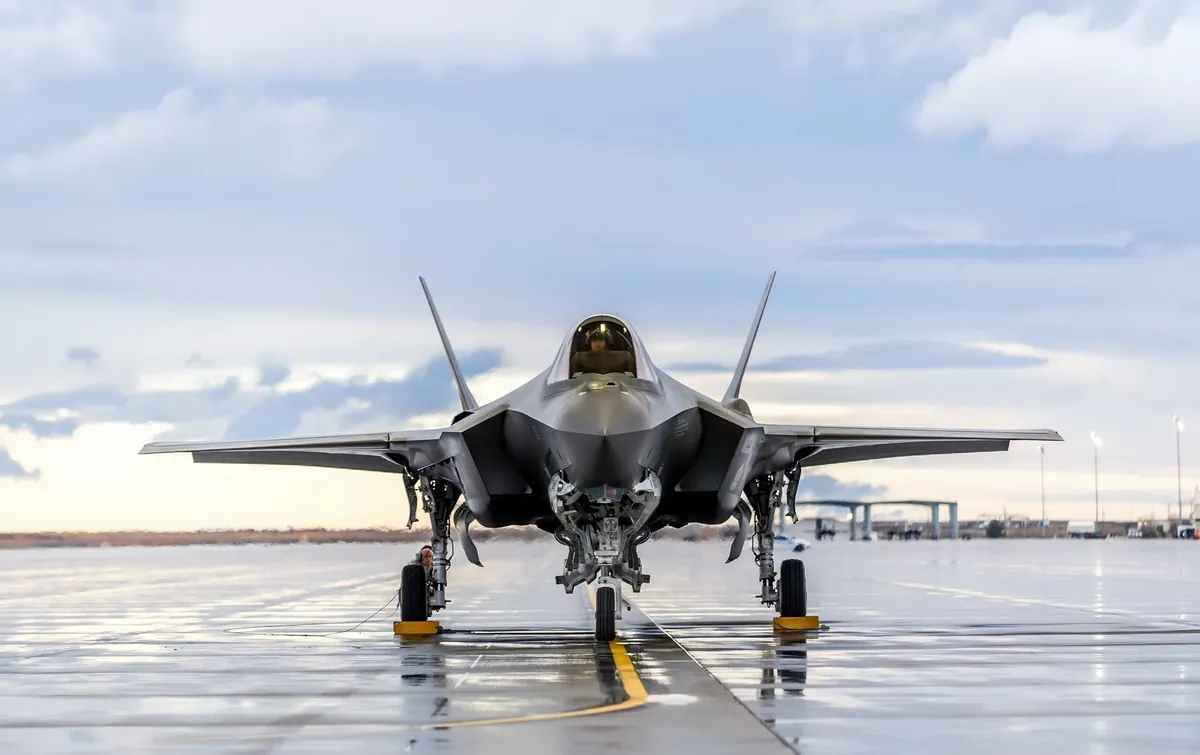
“Germany is reportedly reconsidering its defense procurement strategy, with policymakers examining the possibility of significantly expanding F-35 Lightning II orders while potentially shelving its commitment to a European-developed fighter jet initiative.” This statement underscores a pivotal moment in Germany’s military strategy, as the nation looks to bolster its defense capabilities.
The F-35 Lightning II, manufactured by defense contractor Lockheed Martin, represents the Pentagon’s cornerstone fifth-generation combat platform. The aircraft is designed for air superiority, strike operations, intelligence gathering, and electronic warfare, making it a versatile asset for modern air forces.
Germany’s decision to select the F-35A variant to replace its aging Tornado fleet in 2022 marked a significant shift in its defense policy. The F-35A is the only aircraft certified to carry US B61 nuclear bombs, ensuring that Germany can fulfill NATO’s nuclear-sharing requirements.
As Germany considers expanding its fleet of F-35 Lightning II aircraft, it raises questions about the Future Combat Air System (FCAS), a collaborative initiative launched by France, Germany, and Spain to develop next-generation air combat capabilities. Germany’s potential pivot away from this pan-European fighter development program in favor of expanded American procurement signals deepening questions about the continent’s independent defense industrial capacity.
A substantial German F-35 expansion would represent a significant financial commitment to American defense manufacturers while potentially disappointing European aerospace partners invested in alternative fighter development. This shift could reshape the landscape of European defense collaboration.
Details remain unconfirmed regarding the exact number of F-35s Germany may procure, but the implications of such a decision are profound. The F-35’s combat radius of 684 miles and maximum speed of Mach 1.6 make it a formidable presence in any conflict scenario.
As Germany navigates these complex decisions, the international defense community will be closely watching the outcomes. The F-35 Lightning II’s role in NATO’s collective defense strategy continues to be a focal point for discussions among member nations.
In summary, Germany’s potential expansion of the F-35 fleet reflects a broader trend in defense procurement strategies, emphasizing the need for advanced capabilities in an evolving security environment.