Hostel food often becomes a topic of debate regarding hygiene, trust, and accountability. Recently, a student at the University Institute of Technology, RGPV in Bhopal, India, claimed to have found a lizard in his hostel meal. This alarming allegation has raised concerns among students and faculty alike.
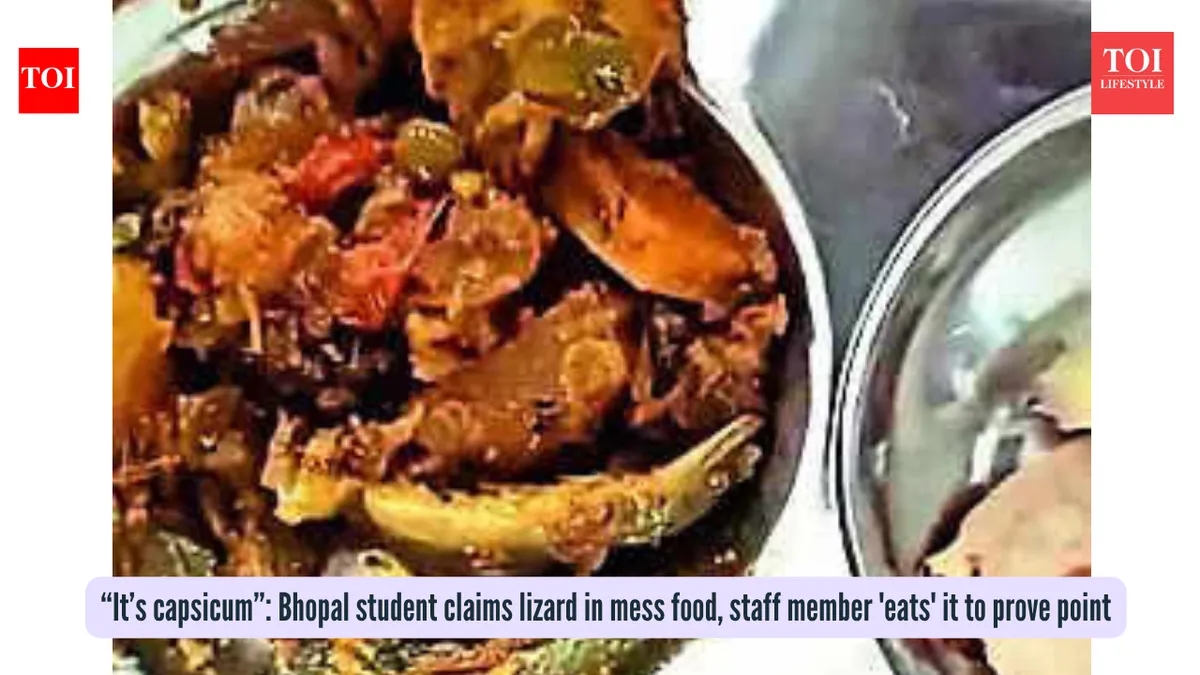
The incident reportedly occurred when the student discovered an unusual object in his food. He insisted that it resembled a lizard, even stating, “Yeh pahu hai iske. Chipkali hai, uski aankh nikal rahi thi,” which translates to, “This is its body. It’s a lizard, its eye was out.” His claims were captured on video, which quickly went viral on social media, drawing widespread attention.
In response to the student’s claim, a staff member from the mess attempted to refute the allegation by insisting that the object was actually capsicum, stating, “Shimla mirch hai yaar,” meaning, “It’s capsicum, man.” To further prove his point, the staff member even ate the object, a move that has been met with skepticism.
RGPV Director Sudhir Bhadoria addressed the situation, assuring that student health would not be compromised. He emphasized that the university would take strict action if negligence was found during the investigation. A committee has been formed to look into the matter thoroughly.
As the investigation unfolds, the canteen operator has denied the allegations, maintaining that the item in question was indeed capsicum. However, the student’s insistence on the object’s resemblance to a lizard has left many questioning the quality and safety of the food served in the hostel.
Details remain unconfirmed regarding the true nature of the object found in the meal. Observers are keenly awaiting the findings of the investigation, which could have significant implications for food safety protocols at the university.
The incident has sparked a broader conversation about food hygiene in educational institutions, with many students expressing their concerns over the quality of meals provided in hostels.
As the university navigates this controversy, it remains to be seen how the situation will affect the reputation of the institution and the trust students place in their dining facilities.