Prior Expectations for TCS
Before the recent downturn, Tata Consultancy Services (TCS) was regarded as a robust player in the software and consulting sector, boasting a market capitalisation of Rs.8,91,913 crores. Investors had high expectations, particularly given TCS’s strong fundamentals, including an average Return on Equity (ROE) of 43.49% and a zero debt-to-equity ratio. The company had maintained a steady dividend yield of 4.42%, which made it an attractive option for institutional investors, who hold 23.25% of its shares. However, the stock’s performance began to show signs of strain as it faced increasing market pressures.
Decisive Moment and Immediate Numbers
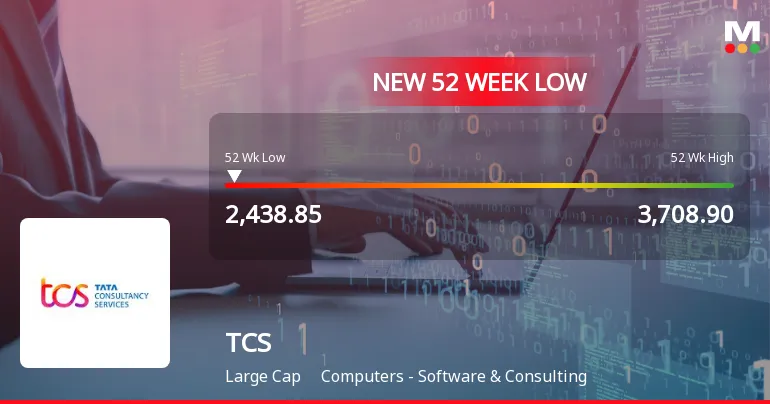
On March 12, 2026, TCS’s share price plummeted to Rs.2440, marking its lowest level in the past year. This decline was part of a broader trend, as the stock lost 7.79% in value over a continuous nine-day period. The bearish trend was underscored by the fact that TCS was trading below all key moving averages, indicating a lack of investor confidence. The Sensex, reflecting the overall market sentiment, also closed down by 269.05 points at 76,100.60, a decline of 0.99%, further compounding the challenges faced by TCS.
Direct Effects on TCS and Investors
The immediate effects of this decline have been significant for TCS and its investors. The stock’s performance has generated a return of -30.08% over the past year, leading to concerns about the company’s future growth prospects. Investors are now reevaluating their positions, with many questioning whether TCS can maintain its previous levels of profitability and market leadership. The decline in quarterly earnings per share (EPS), which have fallen to Rs.29.44, adds to the uncertainty surrounding the company’s financial health.
Expert Perspectives and Market Context
Experts suggest that the current situation reflects broader market dynamics rather than solely issues within TCS. The decline in the Sensex indicates a general downturn in investor sentiment, which has affected many stocks across various sectors. Analysts are closely monitoring TCS’s performance, particularly its ability to navigate this challenging environment while maintaining its strong fundamentals. The company’s average debtor turnover ratio for the half-year period stands at 4.76 times, suggesting that while operational efficiency remains, external market pressures are taking a toll.
Looking Ahead for TCS
As TCS navigates this challenging landscape, the focus will be on how the company adapts to changing market conditions. With a strong foundation in terms of financial metrics, including its zero debt-to-equity ratio and solid ROE, TCS has the potential to recover. However, the current market sentiment poses a significant hurdle that the company must overcome to regain investor confidence.
In summary, TCS’s recent stock performance highlights the volatility in the market and the challenges faced by even the largest companies. As the company works to address these issues, investors will be watching closely for signs of recovery and strategic adjustments that could signal a turnaround.