Reaction from the field
The ongoing conflict in the Middle East has reached a critical juncture, with the war now entering its fourth week since it began on February 28, 2026. The situation has escalated dramatically, resulting in over 2,000 lives lost and significant geopolitical ramifications, particularly concerning global oil supplies.
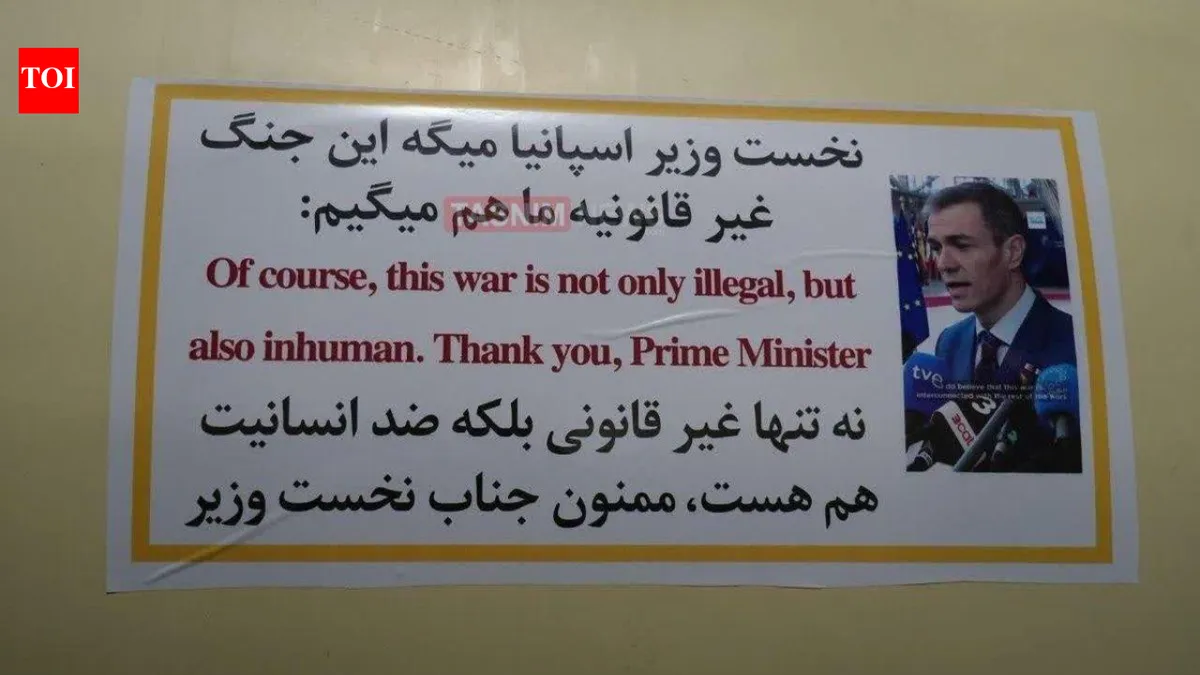
One of the most striking developments occurred when Iran attached Spanish Prime Minister Pedro Sanchez’s anti-war remarks to missiles aimed at Israel. This act underscores the heightened tensions and the intertwining of international political statements with military actions. Sanchez’s remarks, described as “illegal” and “inhuman,” reflect the growing concern over the humanitarian impact of the conflict.
On the ground, the Israeli military has intensified its operations against Hezbollah in Lebanon, indicating a commitment to a prolonged military campaign. Lieutenant General Eyal Zamir stated, “The operation against the Hezbollah terrorist organisation has only begun. This is a prolonged operation,” emphasizing the Israeli government’s determination to address perceived threats from Hezbollah.
In response to the conflict, Iran has issued stern warnings regarding potential U.S. military actions. Iranian Parliament Speaker Mohammad Bagher Ghalibaf declared that any attack on Iranian power plants would lead to the destruction of vital infrastructure across the region. This threat is particularly alarming given that the Strait of Hormuz, a crucial waterway for global oil and LNG supplies, could be closed by Iran’s Islamic Revolutionary Guard Corps if U.S. threats are executed.
The situation remains precarious, as Iran has also threatened to retaliate against U.S. energy facilities if attacked. The Strait of Hormuz is vital, with approximately 20 percent of the world’s oil supplies transiting through this narrow passage. Any disruption could have far-reaching consequences for global energy markets.
In a related development, Kataeb Hezbollah has extended a pause on attacks against the U.S. embassy in Baghdad by five days, indicating a complex web of tactical decisions amid the ongoing conflict. This pause may suggest a temporary de-escalation in one area, even as hostilities intensify elsewhere.
As the conflict unfolds, uncertainties remain regarding the future trajectory of military engagements and the potential for broader international involvement. Israeli Prime Minister Netanyahu has called for increased international participation in the war against Iran, which could further complicate the already volatile situation.
Details remain unconfirmed regarding the full extent of the conflict’s impact on regional stability and international relations. As the situation evolves, the world watches closely, aware that the stakes are high and the consequences of miscalculation could be dire.