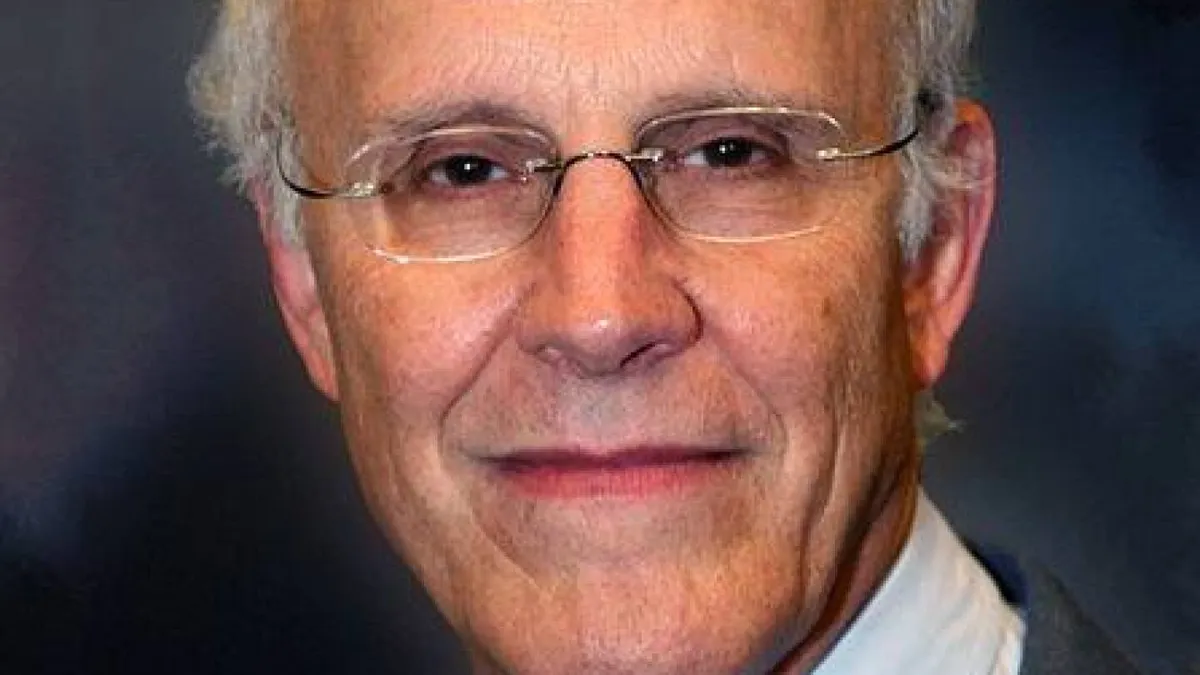
David Gross, a renowned theoretical physicist and Nobel Prize winner, has recently raised alarms about the future of humanity. He argues that the risk of nuclear war could significantly threaten our survival, estimating only a 2% chance of such a catastrophe occurring each year. With this projection, he suggests that humanity may face an expected lifetime of just 35 years.
Gross, who won the Nobel Prize in Physics in 2004 for his discovery of asymptotic freedom in the theory of strong interactions, emphasizes that the threat has escalated in recent years. “The chances of you living 50 years are very small,” he stated. His assertion reflects a deep concern about the current geopolitical climate and its implications for global security.
Asymptotic freedom—a concept that describes how the force between quarks diminishes as they come closer together—has been pivotal in advancing our understanding of particle physics. This principle is part of Gross’s broader contributions to unifying the strong, weak, and electromagnetic forces within the Standard Model. However, despite these scientific achievements, he believes that such progress is overshadowed by existential dangers.
Currently, there are nine nuclear powers worldwide. This multiplicity complicates diplomatic efforts and increases the likelihood of conflict. “We’re entering an incredible arms race,” Gross warned, highlighting how these dynamics can escalate tensions among nations with nuclear capabilities.
In recognition of his groundbreaking work in fundamental physics, Gross was recently awarded the $3 million Special Breakthrough Prize. This accolade underscores not only his contributions to science but also serves as a reminder of the responsibilities that come with such knowledge. Yet, while awards celebrate scientific progress, they do little to mitigate real-world threats.
Observers note that while Gross’s estimates may not be rigorous—he himself acknowledges this—his concerns resonate with many experts in international relations and security studies. The intersection between scientific advancement and global stability presents a complex challenge that humanity must navigate carefully.
As discussions around disarmament and international cooperation intensify, Gross’s warnings serve as a crucial call to action. The stakes are high; ensuring humanity’s survival demands urgent attention to both scientific discovery and geopolitical strategy.
Details remain unconfirmed about specific measures being taken to address these risks. However, as we confront these challenges head-on, the insights from leaders like David Gross will be essential for shaping our collective future.