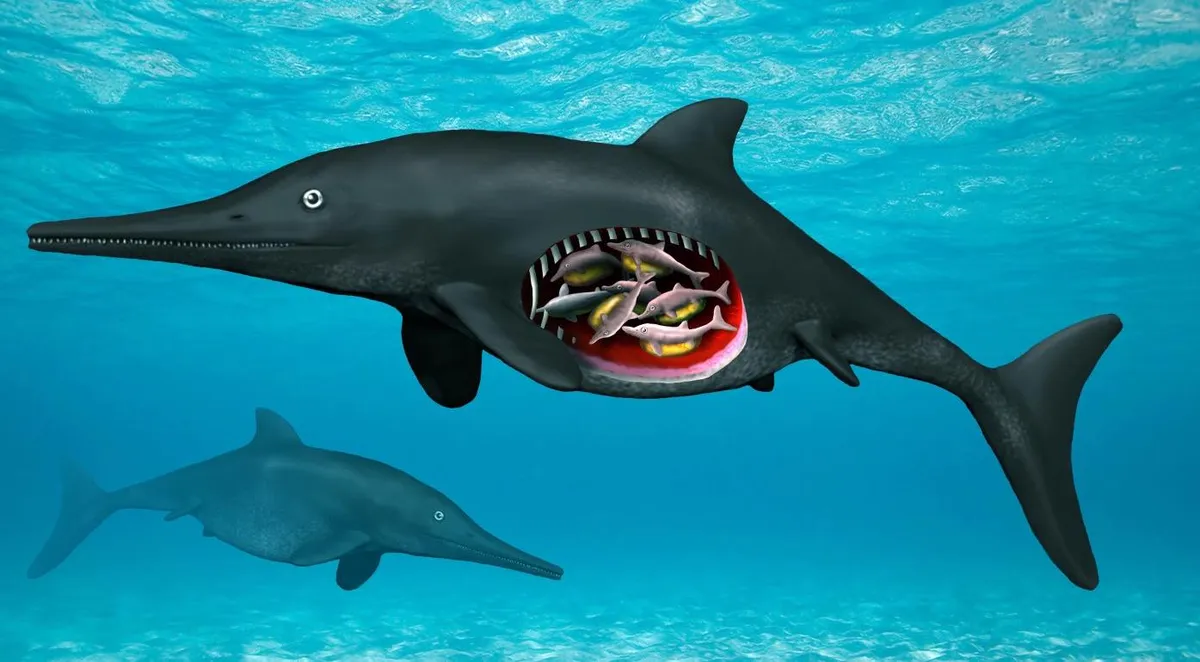
A remarkable ichthyosaur fossil discovered in Germany reveals how an injured marine reptile survived approximately 180 million years ago. The fossil, belonging to the Temnodontosaurus genus, showcases significant jaw injuries, indicating a struggle for survival.
Researchers uncovered the ichthyosaur fossil at the Mistelgau clay pit, a site renowned for its well-preserved marine fossils. This specimen could grow over 20 feet (around 6.5 metres) long and is similar in appearance to modern dolphins.
The find includes fragments of the skull, lower jaw, shoulder girdle, forefins, spine, and over 100 teeth. Initial assessments suggest that this ichthyosaur may have endured longer than previously believed despite its severe injuries.
One researcher noted, “This well-preserved specimen… shows evidence of injuries and adaptations, suggesting survival despite physical challenges.” This discovery adds valuable information to the field of paleontology, particularly regarding ancient marine predators.
As scientists continue to analyze the fossil, they aim to uncover more about the lifestyle and adaptations of these prehistoric creatures. The implications of this find could reshape our understanding of Jurassic sea life and how these reptiles thrived in their environments.