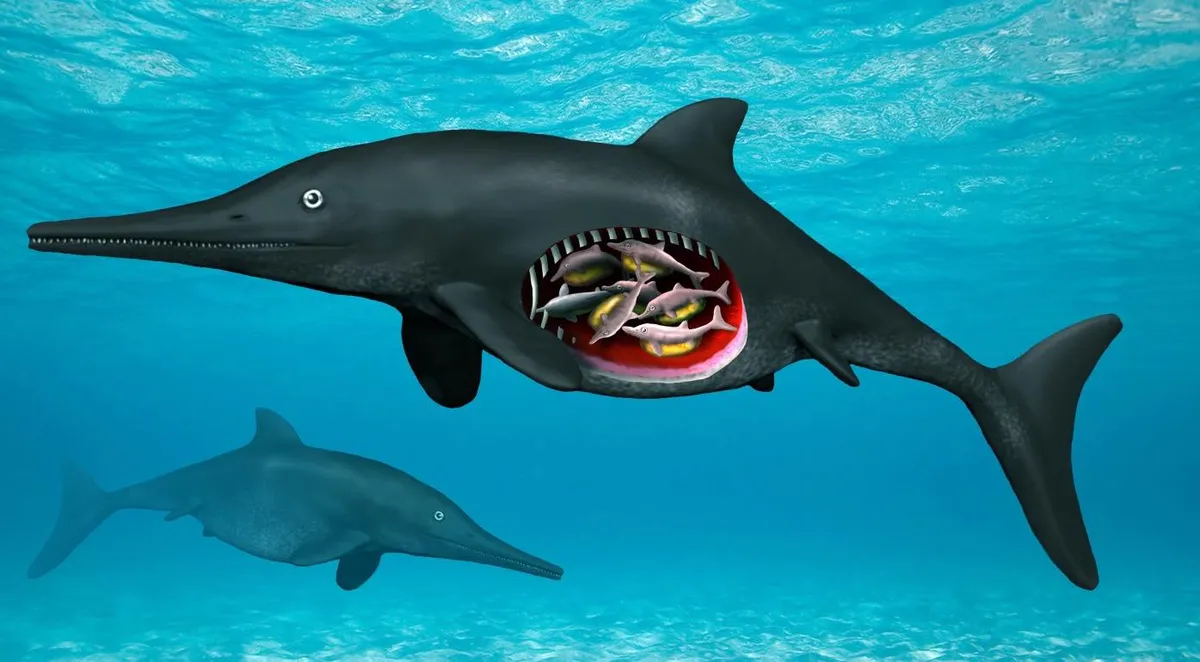
The recent discovery of a 180-million-year-old ichthyosaur fossil in Mistelgau, Germany, presents new insights into the survival and feeding adaptations of these ancient marine reptiles. The specimen, belonging to the genus Temnodontosaurus, measures approximately 21 feet in length and includes a nearly complete skull, lower jaw, shoulder girdle, spine, and over 100 teeth.
This fossil shows significant signs of severe jaw injuries, which challenge previous assumptions about the ichthyosaur’s ability to thrive in its environment. According to Ulrike Albert, a paleontologist involved in the research, “Our Temnodontosaurus fossil is one of the youngest finds of this ichthyosaur genus to date.” This finding suggests that ichthyosaurs were more resilient than previously thought.
Notably, the fossil also contained gastroliths—stones found in the abdominal cavity—which indicate a possible shift in feeding behavior. Stefan Eggmaier remarked on this aspect, stating, “The fact that it nevertheless survived is evidenced, among other things, by its heavily worn teeth and gastroliths, which we were able to identify in the abdominal region.” Such adaptations may reflect changes in marine ecosystems during the Jurassic period.
Researchers believe that these injuries likely limited the animal’s ability to catch prey effectively. The presence of gastroliths further suggests that this ichthyosaur may have employed different strategies for feeding compared to its contemporaries. This discovery contributes valuable information regarding ecological dynamics during the Mesozoic era.
The Mistelgau site has been a rich source of marine fossils since excavations began in 1998. This ongoing research continues to uncover significant findings that enhance our understanding of prehistoric survival and convergent evolution among marine reptiles.