Early exchanges and quick goals
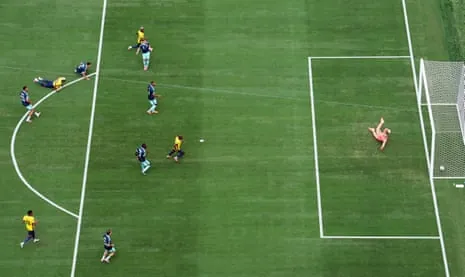
The World Cup 2026 match between Ecuador and Germany at the New York New Jersey Stadium saw a rapid start with both teams finding the net early. Germany, playing in their navy away kit, opened the scoring in the second minute. Leroy Sane received a pass from Florian Wirtz and confidently struck the ball into the bottom left corner, giving Germany an early lead. This goal came after Wirtz made a darting run and pulled the ball back for Sane.
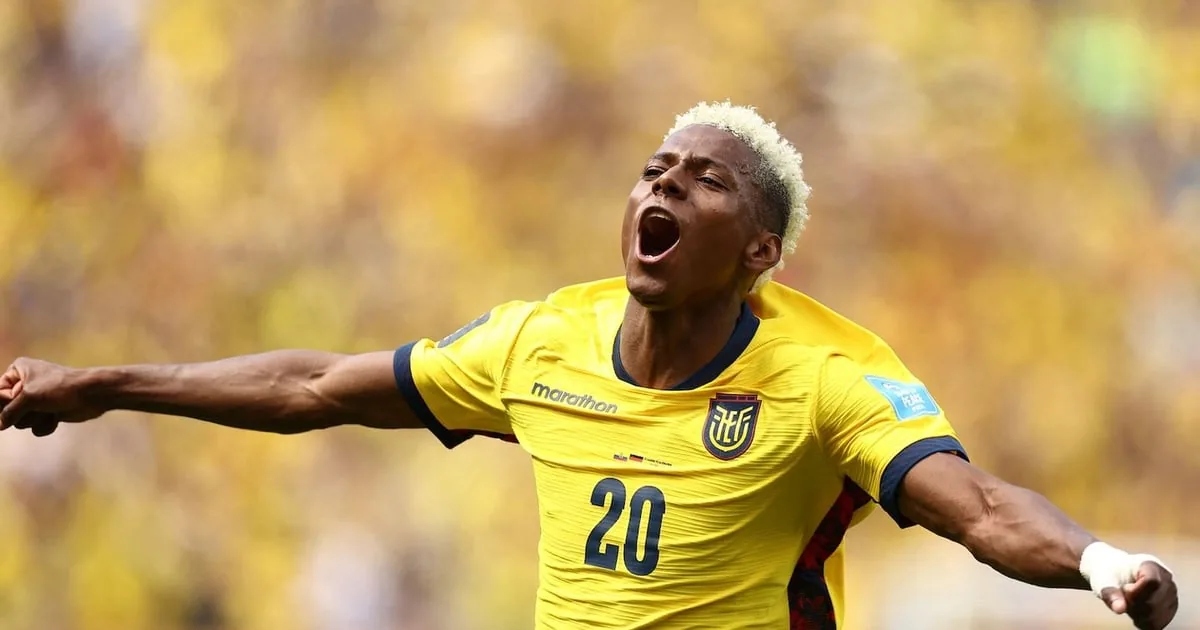
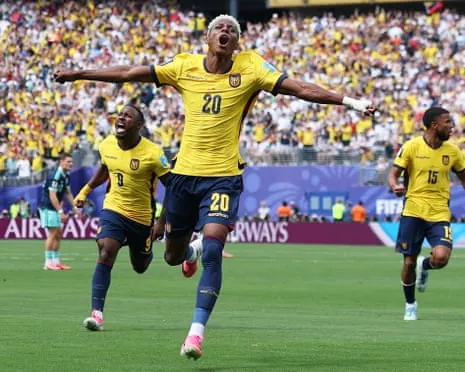
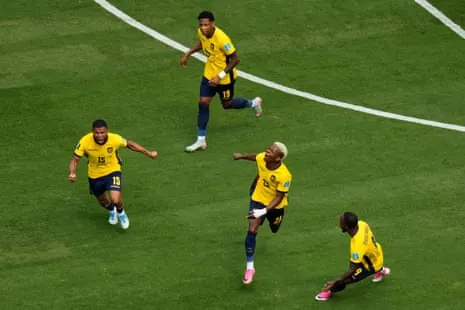
However, Ecuador responded swiftly. In the ninth minute, Nilson Angulo equalised for Ecuador with a powerful low curler into the bottom right of the net. This goal followed a quick break down the left side after Nmecha lost possession. Angulo’s strike went through bodies and past Manuel Neuer, igniting the crowd at the stadium, which featured an estimated 55,000 Ecuador supporters.
The match saw some controversy surrounding Germany’s opening goal. Ecuador players were reportedly furious, believing there was contact from a high German boot on Pedro Vite’s head. Despite appeals, the officials reviewed the incident, and the goal was allowed to stand. Joshua Kimmich also approached the referee during this period.
Ecuador’s spirited response
Ecuador’s reaction to conceding early was described as excellent. They adopted a high-pressing strategy, aiming to unsettle the German side. This approach proved effective, leading to Angulo’s equalising goal. The team’s determination to win the ball back quickly after losing it was noted, with counter-pressing highlighted as an effective tactic in the tournament.
The game maintained a high tempo, with both teams creating opportunities. Nmecha had a low drive that went just wide of the bottom-left corner for Germany. Meanwhile, Ecuador’s Plata made ground down the right, and Angulo combined with Hincapie on the left to win a corner, indicating their continued offensive efforts.
Germany, already confirmed as group winners, made two enforced changes to their starting lineup. Nico Schlotterbeck was out due to ligament damage, and Nathaniel Brown had an adductor problem. Antonio Rüdiger and David Raum took their places. Ecuador also made two changes from their goalless draw with Curaçao, bringing in Joel Ordóñez in defence and Nilson Angulo in attack, with Pervis Estupiñán and Jordy Alcívar moving to the bench.
Tournament implications and team dynamics
For Ecuador, the match was crucial as they needed a win to progress in the tournament. Should they finish in third place, two points would not be enough to advance. The atmosphere in the stadium reflected this urgency, with the large contingent of Ecuador fans creating significant noise, particularly after their equalising goal.
The German team’s defensive setup was observed to be a compact 5-4-1 when Ecuador had possession in their half. This deep-sitting formation raised questions about whether it was a tactical choice or a reaction to Ecuador’s pressure. Reports indicated that Germany had conceded in nine consecutive World Cup finals games, equalling a previous record from 1934 to 1954.
The match also had implications for Scotland’s hopes in the tournament. For Scotland to maintain their position, neither Ecuador nor Curaçao could win their respective matches. If Ecuador were to win, they would reach four points. If Curaçao also won against Côte d’Ivoire, they would need to win by a significant margin to affect Côte d’Ivoire’s goal difference sufficiently to surpass Scotland in the third-place table.
The game is part of the conclusion of Group D, where Germany had already secured the top spot. Ecuador’s captain, Moisés Caicedo, exchanged pennants with Germany’s Joshua Kimmich before the start of the match.
Source: theguardian.com