FIFA Chief Operating Officer Kevin Lamour has stated that staff were deceived regarding President Gianni Infantino’s plan to sell stakes in future World Cup profits to private equity funds. Lamour, a long-time colleague of Infantino at both FIFA and UEFA, suggested the project should not proceed, describing it as the initiative of one individual.
Lamour’s comments were made in a statement to a news agency, where he defended his colleagues amidst significant backlash against Infantino’s proposal. He indicated that staff were “deceived” by a lack of transparency in the planning of the sale over recent months and “deserve better than contempt and intimidation.”
Hours before Lamour’s statement, Carlos Cordeiro, Infantino’s senior adviser, resigned from his position. Cordeiro, a former Goldman Sachs banker who represented the football body on the White House Task Force for the World Cup, urged other senior FIFA staff to speak out against the plan. He stated he could not support FIFA considering selling a stake in the World Cup, calling the proposed commercial subsidiary “a bad deal for football.”
Cordeiro clarified that he had no involvement in the proposal and opposed it unequivocally. He noted that FIFA already possesses significant financial resources, including billions in reserves and no debt, questioning the rationale behind selling a permanent stake in football’s most valuable asset to raise funds. He argued that this action would be “mortgaging football’s future without any compelling justification.”
Infantino’s proposal involves spinning off FIFA’s commercial operations, including World Cups and Club World Cups for both men and women, into a subsidiary. This subsidiary would have a portion owned by private investors. The “anchor investor” for this initiative is described as Joshua Kushner, the younger brother of Jared Kushner.
Lamour, who has held his post, affirmed his duty to his colleagues, stating that if his stance meant losing his job, he would accept that decision. He has been involved in football politics for two decades, having previously served as an aide to former UEFA President Michel Platini.
Widespread Opposition to the Plan
The proposal has met with strong opposition from various football confederations. UEFA and its 55 member associations have unanimously rejected FIFA’s plan to transfer ownership interests in the World Cup and other FIFA competitions to private investors. UEFA emphasized that the World Cup is a sporting legacy, not an investment product, and should not be surrendered to private investors.
UEFA’s statement highlighted concerns about the proposal being conceived in secret and brought close to approval without meaningful consultation. The European body described this as a “profound failure of leadership” and an “abdication of FIFA’s duty as the custodian of world football.”
The Asian Football Confederation (AFC) has also expressed solidarity with UEFA and Concacaf, the governing body for North, Central American, and Caribbean football, in opposing Infantino’s plans. The AFC stated that the plan could not “realistically achieve the necessary broad consensus and unity required to move forward.”
The AFC further criticized FIFA for setting the “direction of travel” for a significant initiative without consulting stakeholders, leading to confederations, member associations, and even FIFA’s own governing bodies feeling “sidelined.” The AFC called for an urgent review of FIFA’s governance and decision-making framework to ensure global proposals are developed through proper consultation.
Andy Burnham, a Prime Minister, stated that Gianni Infantino was “the wrong man” to lead FIFA, criticizing the proposal as an “outrageous suggestion.” He made these comments after Cordeiro’s resignation and the AFC’s opposition became public.
Implications for FIFA Competitions
UEFA has declared that its national teams will not participate in any FIFA competition as long as these proposals remain active, unless the plan is entirely abandoned and binding assurances are given that FIFA will not again open its governance or competitions to private ownership. UEFA’s stance is that the World Cup belongs to football and should never be for sale.
The opposition from UEFA, Concacaf, and the AFC suggests that Infantino’s plans face significant hurdles if put to a vote among FIFA members. Infantino had indicated that the proposals would require a simple majority for approval.
Cordeiro, who served as a senior adviser for nearly five years, stressed that FIFA’s responsibility is to protect and strengthen football for future generations, not to maximize commercial returns at any cost. He highlighted unanswered questions regarding the deal, including its necessity, timing, oversight, and beneficiaries.
While UEFA members are among the wealthiest, some nations rely on FIFA funding for infrastructure and grassroots programs. Rogers Byamukama of the Ugandan Football Federation suggested that any avenue providing more resources should be explored, particularly for regions like Africa where resources are scarce. He acknowledged UEFA’s right to speak out but noted that its members are not as reliant on FIFA funding as many other associations globally.
FIFA, in a statement, affirmed its intention to continue with the plan, asserting that “nobody is selling football.” The organization claimed that the consultation process had been “disrupted by incorrect media reports.”
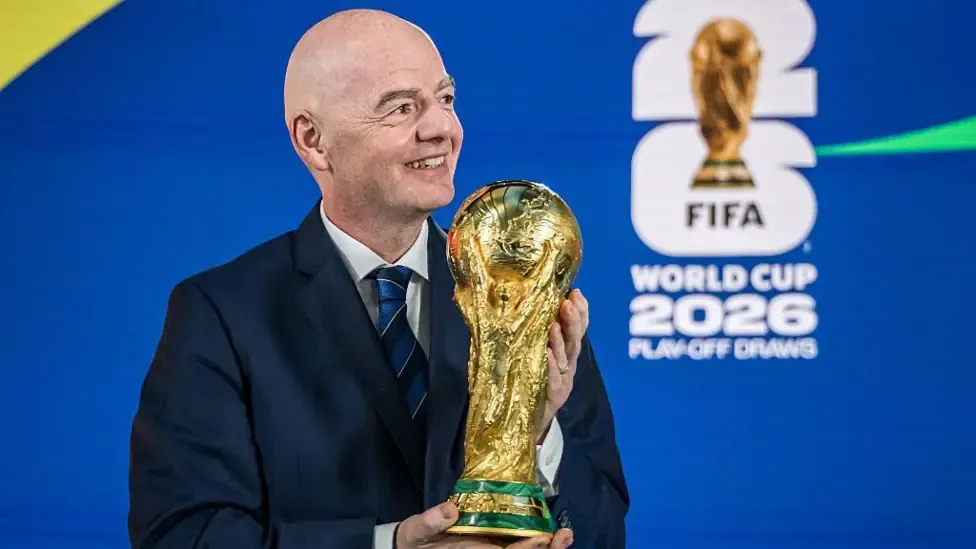
Infantino, who has been president of FIFA for over a decade, is expected to seek re-election unopposed next March, with a November 18 deadline set for challengers.
Source: aljazeera.com