Post-Match Confrontation and Medal Ceremony Controversy
Argentina faced considerable scrutiny following their defeat to Spain in the FIFA World Cup 2026 final. The post-match events, including a confrontation between players and their conduct during the medal ceremony, garnered widespread criticism.
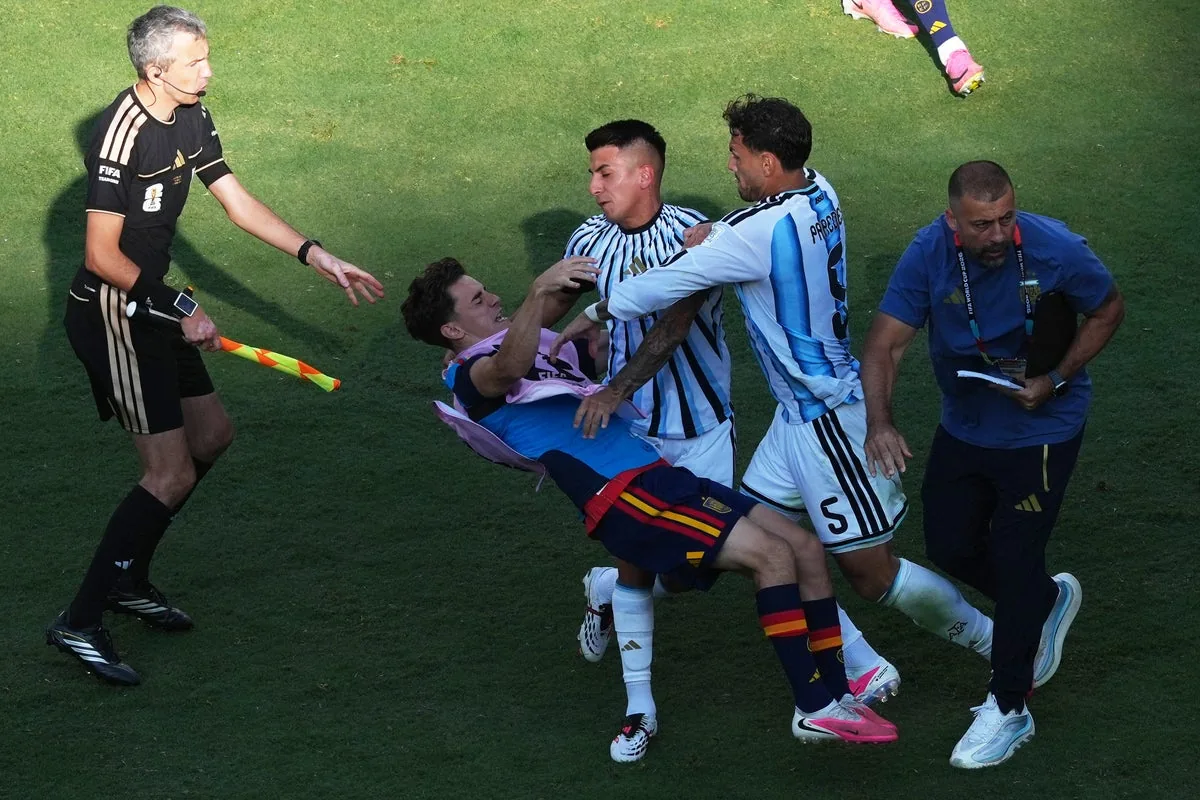
Immediately after the final whistle, a scuffle broke out between players from both teams. Video footage showed Argentina defender Leandro Paredes in an altercation with Spain’s Eric Garcia and Gavi. Paredes reportedly grabbed Garcia by the throat before pushing Gavi to the ground when he attempted to intervene. Players and Argentina coach Lionel Scaloni quickly stepped in to de-escalate the situation. Paredes was subsequently shown a red card.
The controversy extended to the medal ceremony. After collecting their silver medals, Lionel Messi and his teammates did not remain on the podium to applaud Spain during their trophy presentation. Instead, they moved to the opposite side of the pitch. This action drew attention as Spain had previously formed a guard of honour and applauded Argentina as they received their runners-up medals.
During the individual awards ceremony, when Rodri stepped forward to receive the Golden Ball as the tournament’s best player, sections of Argentina supporters in the stadium chanted Lionel Messi’s name, which also attracted criticism.
Potential Disciplinary Measures
Argentina could face additional disciplinary proceedings following the post-match incidents. FIFA is expected to investigate the scenes to determine if further action is warranted. The organization’s Disciplinary Code outlines potential sanctions for various forms of misconduct.
Leandro Paredes and Enzo Fernandez, who was sent off during normal time for two yellow card offenses, will each receive a one-match ban for their red cards, to be applied in Argentina’s next competitive match. However, FIFA’s Disciplinary Code states that players sent off for violent conduct will be suspended for at least three matches. Misconduct involving assault, such as elbowing, punching, kicking, biting, spitting at, or hitting an opponent, can result in a suspension of at least three matches or an appropriate period.
Sanctions can also be applied retrospectively. While the actions of Paredes and Nahuel Molina, who reportedly clashed with Spain captain Rodri, may not be as severe as some past high-profile incidents, there is scope for FIFA to increase punishments beyond a nominal three-match ban. Molina would need to be cited as he did not receive a card during the match.
The Argentine Football Association (AFA) could also face disciplinary action if FIFA’s investigation uncovers more instances of misconduct. FIFA’s code indicates that if a national team conducts itself improperly, such as five or more players receiving individual disciplinary sanctions during a match, measures may be taken against the association. Furthermore, Argentina’s post-final actions could be seen as bringing the sport or FIFA into disrepute, potentially leading to additional disciplinary measures.
The final itself saw Spain defeat Argentina 1-0 after extra time at the New York New Jersey Stadium. Ferran Torres scored the decisive goal in the 106th minute, securing Spain’s second FIFA World Cup title and extending their unbeaten run to 38 matches. Argentina goalkeeper Emiliano Martinez made several saves to keep the score level during normal time.
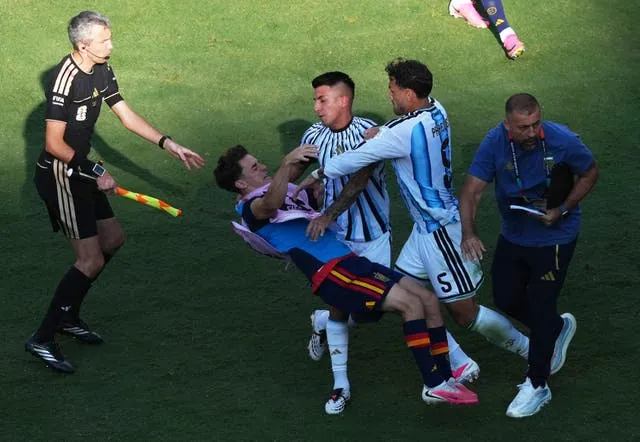
The post-match discussion largely focused on Argentina’s conduct, with their actions during the on-field confrontation and the medal ceremony becoming a significant talking point alongside the match result.
Read Also
Source: timesofindia.indiatimes.com