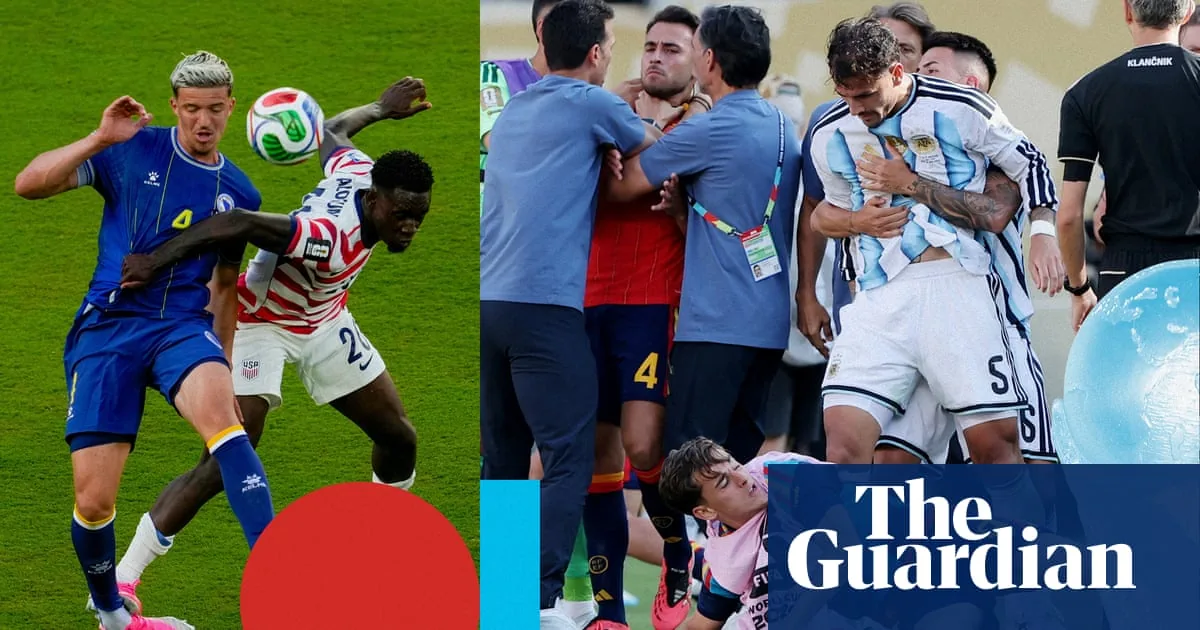
Tournament concludes with Spain victory amidst political undertones
The World Cup 2026 concluded with Spain emerging victorious, defeating reigning champions Argentina in the final after overcoming tournament favourites France. The Spanish captain, Rodri, prepared to lift the trophy, but the moment was briefly overshadowed by United States President Donald Trump remaining on stage. FIFA President Gianni Infantino reportedly intervened to prompt Trump to move, allowing the world champions to celebrate their win. This incident marked an unusual end to a tournament characterised by a mix of sporting spectacle and off-field controversies.
The president had previously ordered a halt to US trade with Spain, citing insufficient military spending and Spain’s opposition to the US-Israel war on Iran. His presence and actions were noted by many, including a Palestinian American fan in New York who described the tournament as a “political summit” with Trump at its centre. Trump also acknowledged making a call to top FIFA officials to revoke the suspension of USA striker Florian Balogun, though Team America subsequently suffered a 4-1 loss to Belgium.
The tournament showcased football’s capacity to unite, with fans of losing teams continuing to celebrate the game. However, it also highlighted divisions, with some Iranian fans reportedly facing abuse and Islamophobic chants from anti-government activists. The US hosts imposed travel restrictions on the Iranian team, and after Iran’s failure to qualify from the group stage, US Department of Homeland Security Secretary Markwayne Mullin expressed his happiness.
Accessibility and Americanisation of the game
For many, the World Cup was a display of American hospitality, with cities like Kansas City embracing Algeria and Boston being overrun by Scottish fans. Conversely, some viewed it through the lens of the Trump administration’s policies, including visa denials and the reported mistreatment of the Iranian team. The denial of entry to Somali referee Omar Artan also drew criticism. The tournament brought the global sport to a country that had not fully embraced football, leading FIFA to allow the US to implement its own adaptations.
These adaptations included mid-half hydration breaks used for commercials, championship rings, and half-time shows, which some spectators perceived as an effort to Americanise the game. While football’s universal appeal is often attributed to its accessibility, allowing anyone to play with just a ball, watching the World Cup 2026 became a privilege for those who could afford it. Ticket prices ranged from hundreds to hundreds of thousands of dollars, effectively excluding many working-class fans.
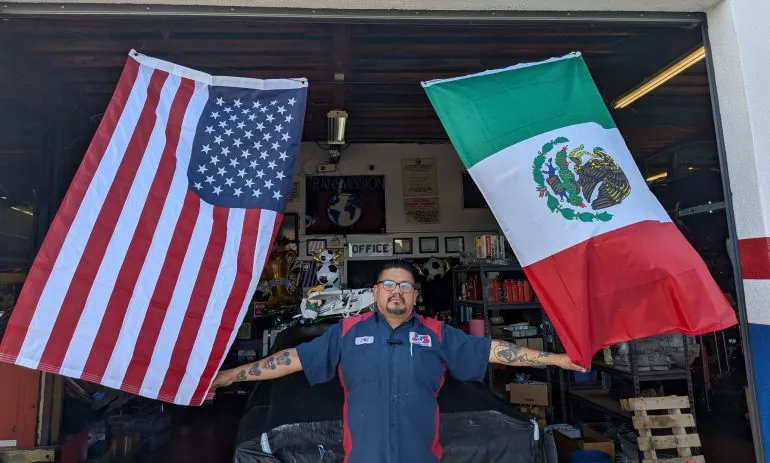
Juan Cortes, a mechanic in the Los Angeles area, expressed his disappointment at the start of the tournament, noting that despite the Los Angeles Stadium being close to his shop, he could not afford to attend any matches. The perception of distance was also evident in the final, which, despite appearing to be in New York due to the city’s skyline, was held in suburban New Jersey, an area inaccessible by foot and challenging for city dwellers to reach.
Sporting highlights and ongoing debates
Despite the controversies, the World Cup 2026 delivered memorable sporting moments. It featured dark horses and Cinderella stories, such as the performance of Cape Verde and Norway’s deep run into the quarter-finals. Yet, the top four FIFA-ranked teams ultimately reached the semi-finals. The tournament saw the emergence of young talents like Lamine Yamal and the continued strong performances of veterans such as Lionel Messi. Unsung heroes like Spain’s Marc Cucurella and Pedro Porro played crucial roles, while some prominent stars from the German and Portuguese squads did not leave a significant mark.
The quality of football was described as good, though perhaps not consistently great. Several dramatic matches occurred in the last 32 or last 16 rounds, including Brazil against Japan, Morocco versus the Netherlands, and Argentina against Egypt. The quarter-finals were less inspiring. Argentina’s semi-final victory over England was thrilling, marked by a collapse that will likely be discussed for years. However, Spain’s win over France in their semi-final was described as relatively easy, with Spain establishing an unchallenged superiority.
The final match itself was characterised as dismal, with the right team winning in a “bloodless way.” This ending, some suggest, coloured the perception of the entire tournament. Issues such as the treatment of Iran and the high ticket prices are expected to resurface in future discussions about the sport. The Italian newspaper la Gazzetta dello Sport reportedly called the World Cup a “disaster” due to concerns over ticket prices, the Balogun affair, weather conditions, increased games, and decreased rest for players. This led to their ticket allocation for the final being reduced from five to two, raising questions about media access and the official narrative of the tournament.
The World Cup 2026, despite its contradictions, delivered moments of excitement and entertainment that will be remembered for decades.

Read Also
Source: aljazeera.com